
Brand guidelines
Brand Guidelines is where the rules live — the things a palette and a font list cannot express.
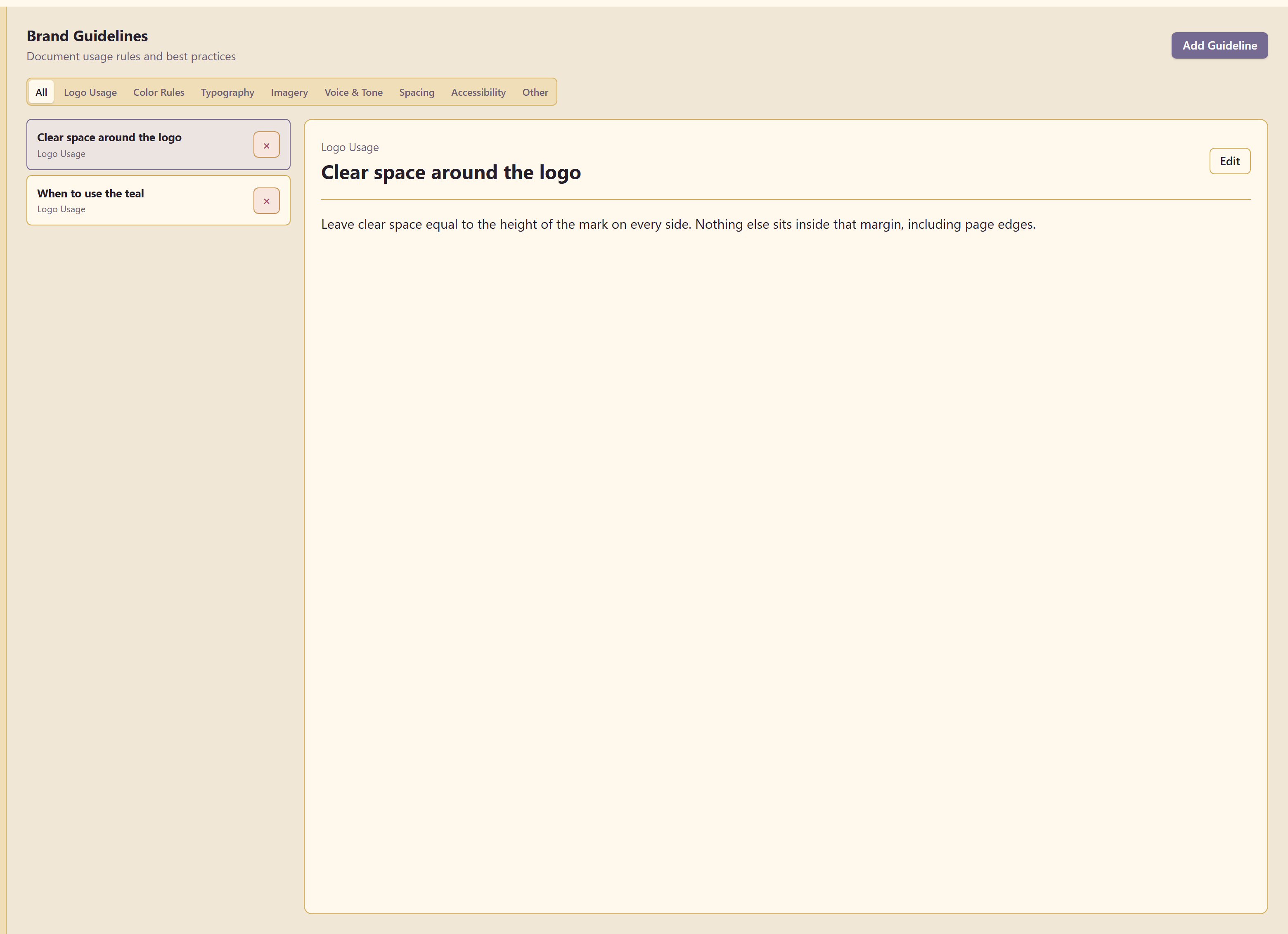
Adding a guideline
Section titled “Adding a guideline”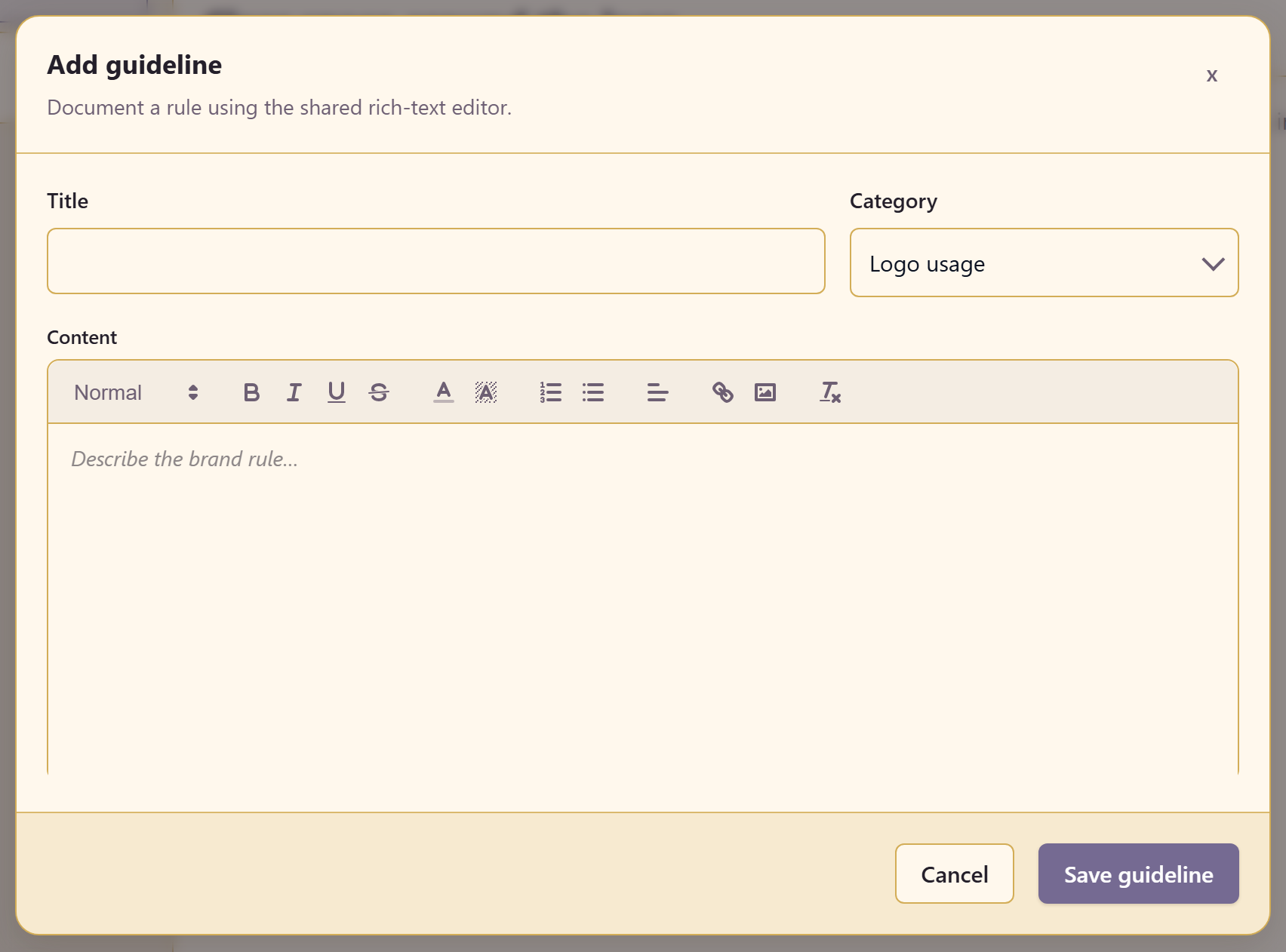
A guideline has a title, a category, and content written in a rich-text editor with headings, bold and italic, ordered and bulleted lists, links, and images.
Images matter more than the formatting. A rule about clear space is understood instantly from a diagram and argued about endlessly in prose.
Categories
Section titled “Categories”Logo usage, Color rules, Typography, Imagery, Voice & Tone, Spacing, Accessibility, and Other, with an All view.
Write the rules people break
Section titled “Write the rules people break”The temptation is to write a brand history. Nobody reads it.
What gets read is the specific instruction at the moment somebody is about to get it wrong: how much clear space, which colour for a primary action, whether the logo may sit on a photograph, what the alt-text convention is.
Three tests for whether a guideline earns its place:
Has someone got this wrong? If not, you are documenting a hypothetical.
Is it checkable? “Use the brand voice” cannot be checked. “Never use more than one exclamation mark in a heading” can.
Does it say what to do instead? A prohibition without an alternative gets ignored, because the person still has the problem that made them break the rule.
Generating a document
Section titled “Generating a document”More brand actions includes Generate guidelines document, which produces a written document from the brand, and Brand book (HTML), which produces a presentable version.
Related
Section titled “Related”Export and share covers the brand book. Brand controls enforces the rules a guideline can only ask for.